What is spirulina?
Spirulina is a blue-green microalgae. It has long been used as a dietary supplement and is often sold in tablet or powder form. Its popularity is mainly due to the fact that spirulina naturally contains many nutrients in a compact form.
Spirulina is often cited as a product rich in:
- proteins and amino acids (building blocks),
- vitamins and minerals,
- antioxidants, including the pigment phycocyanin (known for its protective properties).
This combination is the reason spirulina is often mentioned in relation to hair, skin and general vitality.
What is spirulina good for (and what does that have to do with hair)?
When people associate spirulina with hair, it usually concerns three themes:
-
Supporting building materials:
Hair consists largely of keratin, a protein. When your diet (or intake) is not balanced, this can manifest itself in hair that breaks more easily or feels less strong. Spirulina is often mentioned because it contains a relatively high concentration of proteins and amino acids.
-
Protection against daily stress:
Your hair and scalp are exposed to all kinds of stressors every day: UV rays, air pollution, stress, styling and heat. Antioxidants can help to better cope with this stress. Spirulina contains antioxidants such as phycocyanin, which is why it is often mentioned in this context.
-
Scalp comfort:
A scalp that is easily irritated (itching, redness, flaking) is not ideal for a healthy hair cycle. Spirulina is also regularly linked to a soothing effect, which is particularly interesting if your routine is focused on improving the condition of your scalp.
Why spirulina may be interesting for hair growth
Hair growth occurs in cycles. A hair spends a period in the growth phase, then goes through a short transition phase and finally enters a resting phase, after which the hair falls out. With hair loss, you often see that the growth phase becomes shorter and the resting phase longer. As a result, hair grows for less time and its density visibly decreases.
Spirulina is interesting because it can potentially address several factors at once:
- it can contribute to a better “foundation” in terms of nutrients and building materials,
- it contains antioxidants that help protect against oxidative stress,
- and there are indications that spirulina extracts may influence inflammatory processes and pathways related to DHT. DHT is a hormone formed from testosterone, and in people with a genetic predisposition, it attaches itself to hair follicles, causing them to shrink and your hair to become increasingly thin (leading to visible hair loss).
What does research say about spirulina and hair growth?
A scientific study from 2025 (published in Biotechnology and Bioprocess Engineering) looked at spirulina extracts and their effect on two factors that are often associated with hair loss: inflammatory activity and an enzyme involved in the production of DHT.
The researchers found that the results differed depending on how the spirulina extract was made.
- A water extract showed stronger anti-inflammatory effects.
- An ethanol extract showed a stronger ability to inhibit DHT production.
In their model, the researchers also observed that both extracts stimulated hair growth. In addition, they observed changes in substances related to the “growth environment” around the hair follicles. For example, certain inflammatory factors decreased and a signalling substance that is important for “activating” the hair follicle and stimulating hair growth increased.
It is important to note that these results are interesting and promising, but they remain preclinical research. There is therefore no guarantee that the same effect will be seen in humans. However, it does help to understand why spirulina is increasingly being researched and mentioned in relation to hair.
Spirulina in hair care: why is it used in products?
Spirulina is not only used as a supplement, but is also found in hair products. In care products, the emphasis is usually on protecting and caring for the hair and scalp, often because spirulina contains antioxidants.
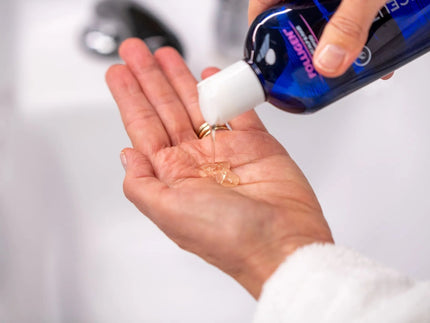
One example is Abyssian Daily Shield Superfood Conditioner (250 ml), which contains spirulina as an ingredient. This makes it a good choice if you are looking for a conditioner that not only softens your hair but also helps to protect and care for it on a daily basis.
How do you use spirulina and when can you expect results?
When using spirulina for your hair, consistency is key. Hair grows slowly, and changes in hair quality or hair loss are usually only visible after weeks or months. So don't expect to see a difference after a few days; rather, look at a period of several months.
It also helps to have a clear goal in mind:
- Do you mainly want your hair to break less and feel stronger? Then focus on care, gentle washing, less heat and sufficient nutrients.
- Is your scalp sensitive or easily irritated? Then a gentle routine is important, with products that suit your scalp well.
- Is hereditary hair loss a factor? Then it is often wise to look at the bigger picture and possibly seek advice on proven treatments, in addition to supportive ingredients.
Conclusion: is spirulina worth it for your hair?
Spirulina is not a miracle cure for hair loss. However, it is an ingredient that can logically fit into a broader approach, as it combines nutrients and antioxidants. Furthermore, research shows that spirulina extracts can influence inflammatory processes and DHT production in models, and that there are signs consistent with hair growth stimulation.
Sources
Jang, J. Y., Jang, B. J., & Shin, H. S. (2025). Evaluation of hair growth-promoting, anti-inflammatory, and 5α-reductase inhibitory effects of Spirulina extract using in vitro and in vivo models. Biotechnology and Bioprocess Engineering, 30, 786–793. https://doi.org/10.1007/s12257-025-00213-x
Summary
The blue-green micro-alga spirulina is increasingly in the spotlight as a natural aid for a healthy scalp and stronger hair. This article explains how its high concentration of protein, amino acids and antioxidants helps protect hair follicles from daily influences. Readers will discover why this "superfood" can be a valuable addition to a balanced diet for maintaining vital hair growth.